How we fixed the Ozone layer ☁️🕳️
+ why chemicals caused the Ozone hole & how countries united to fix it.

Here at the Daily Concept, we are deeply interested in the ways that our world & climate are changing:
We’ve previously covered disturbing trends like coral reef bleaching and desertification.
That’s why we have also focused on climate solutions, like carbon removal, green concrete, and ecosystem restoration.
However, focusing on the problems caused by climate change can result in eco-anxiety — another topic we’ve covered.
Today’s newsletter is about the hole in the Ozone Layer and the unprecedented international effort to stop it from growing.
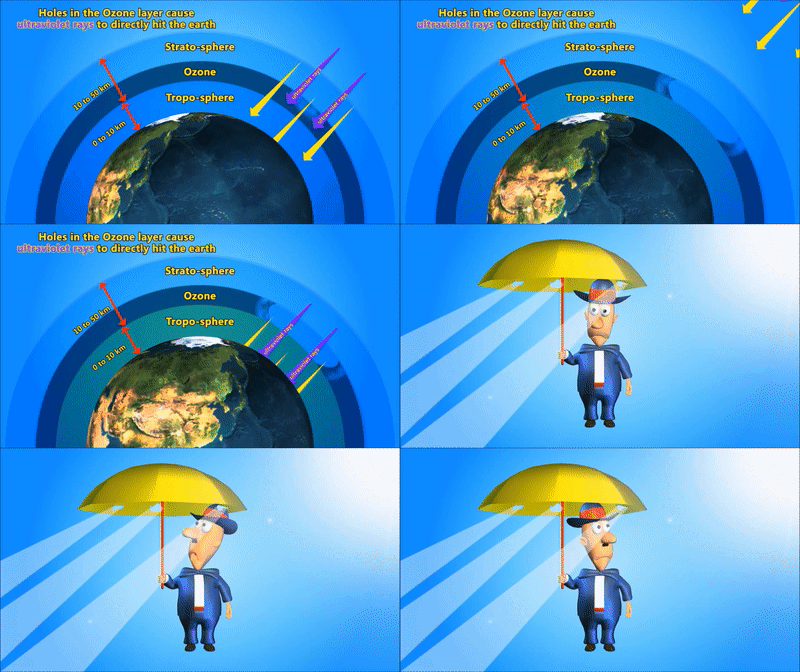
What is the Ozone layer?
Our planet is surrounded by an atmosphere consisting of gases and water vapor.
It consists of five layers, including:
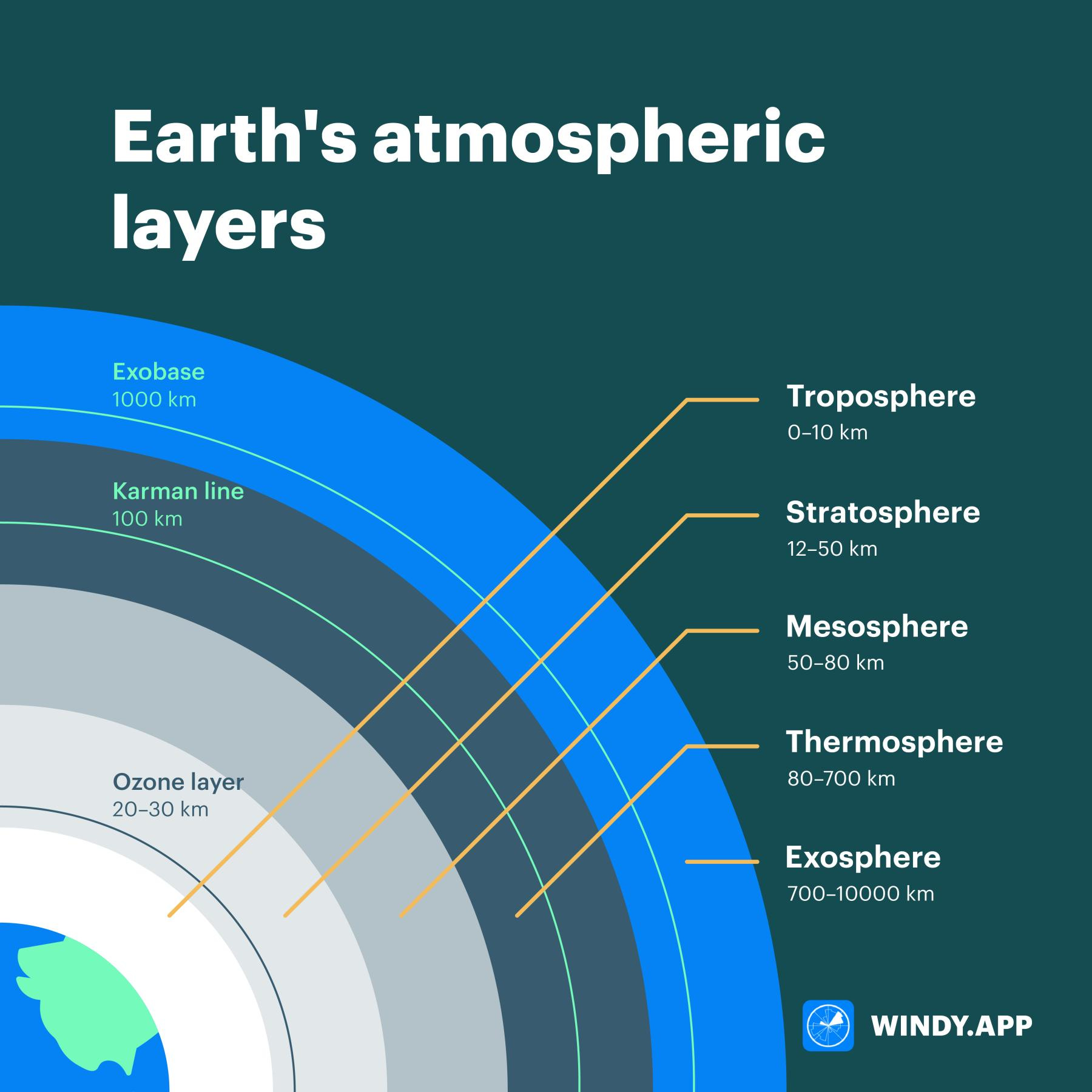
Each layer of the atmosphere serves an important function in regulating the Earth’s life-sustaining climate.
The Stratosphere sits about 30 miles above the Earth's surface. It contains the Ozone layer, which is made of Ozone (O3), a reactive gas of gas made up of three oxygen atoms.
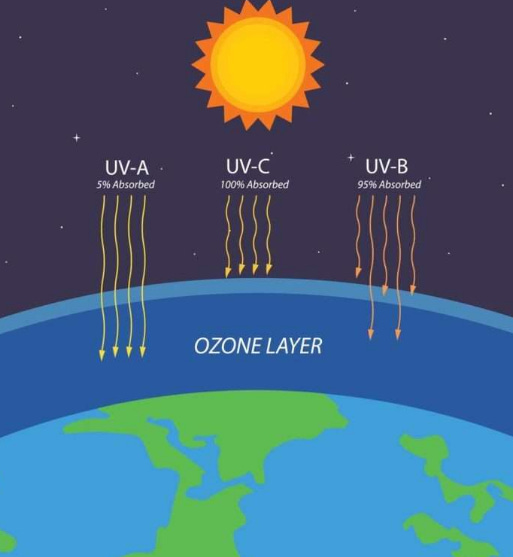
Ozone interacts with light through photochemical processes. These processes allow the Ozone layer to shield the Earth from biologically harmful ultraviolet radiation generated by the sun.
Basically, the Ozone layer functions as sunscreen for our planet and humanity itself by preventing the most harmful UV rays from reaching us.
Why does the Ozone layer have a hole?
1928: General Motors engineer Thomas Midgely became the first person to synthesize chemicals called That’s why we have also focused on climate solutions, like carbon removal, green concrete, and ecosystem restoration. (CFCs).
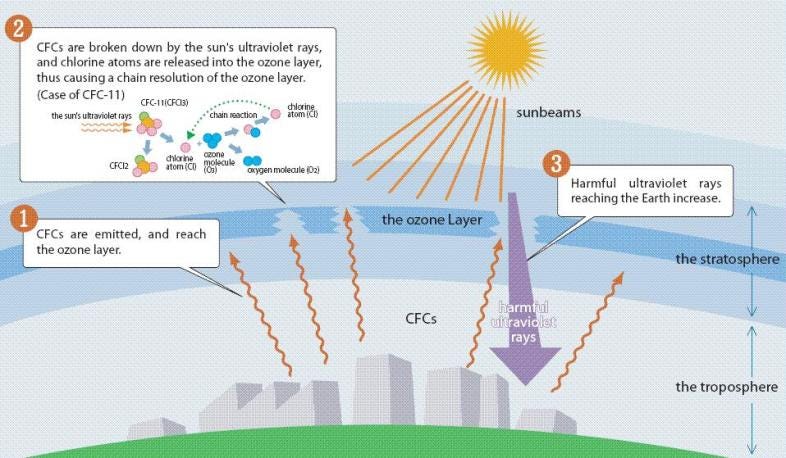
CFCs provided a non-toxic alternative to more dangerous chemicals that were used in refrigerators.
During the 1930s, companies began to incorporate CFCs into air conditioners, fire extinguishers, and aerosols.
1974: Scientists discovered that when CFCs interact with UV radiation in the atmosphere, they can deplete Ozone levels.
Low levels of Ozone raise the risk of skin cancer, reduce plant growth, and damage marine ecosystems.
1977: Thirty-two countries agreed to the “World Plan of Action on the Ozone Layer,” leading to more research into the Ozone layer and its role in our climate.

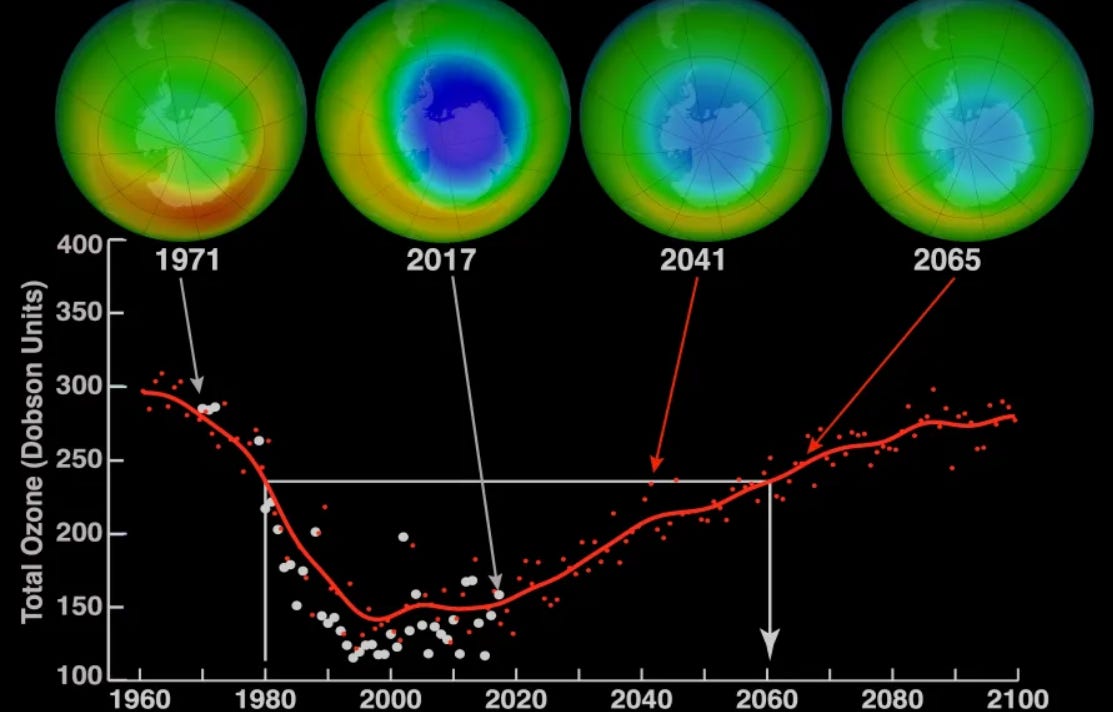
1985: Scientists discovered that Ozone rapidly decreases above Antarctica between September and November.
The area of depleted Ozone covers an area of about 7.7 million square miles (20 million sq km) above Antarctica.
It became known as the “Ozone Hole.”
Researchers confirmed that Ozone was being lost over this region because the spring sunrise in the Antarctic activates atmospheric chlorine.
CFC emissions were making this worse because CFCs increases the amount of chlorine in the atmosphere.
What was done about the problem?
After discovering the hole, scientists and nation-states immediately began work on a treaty intended to reduce CFC use worldwide.
1987: The international community finalized the Montreal Protocol, which aimed to phase out CFCs and nearly other 100 synthetic chemicals that weaken the ozone layer.
It went into effect in 1989 and became the first (and only) global treaty to be ratified by all 197 countries on Earth. As part of the treaty:
participating countries agreed to phase out the production and consumption of the most problematic CFCs
a fund was created to help developing countries implement its requirements.
The best part? The plan worked.
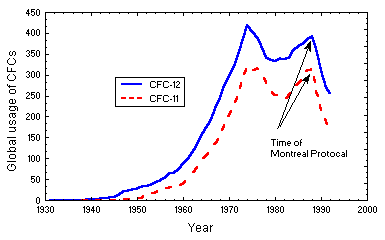
By 2009, 98% of the ozone-depleting chemicals targeted by the protocol had been phased out worldwide.
Later on, amendments were added to the Protocol that banned harmful chemicals used to replace CFCs, like hydrochlorofluorocarbons (HCFCs).

More good news: last year, a panel of U.N.-backed experts confirmed that the Earth's Ozone layer is on track to recover in the coming decades.
As environmental physics professor Laura Revell said:
“[The Montreal Protocol] is a much more successful bit of climate protection legislation than any of the other [climate] agreements we've had to date."
Ozone-depleting CFC emissions were identified and halted just in time.
If nothing had been done, MIT Professor Susan Solomon said that humanity would have faced:
“Ozone hole-like conditions over the whole planet, and the planet would have become uninhabitable.”
The treaty also had a side benefit.
The reduction in emissions triggered by the treaty prevented between 9.7 and 12.5 gigatons of CO2 equivalent greenhouse gases from being released into the atmosphere.
The Montreal Protocol also demonstrated how effective international diplomacy can be in preventing climate catastrophes.
P.S. If you enjoyed this newsletter, please consider a paid subscription to support the Daily Concept for just $6 per month.
For the price of a cup of coffee, you can help me turn this from a passion project into a livelihood. ☕
Sincerely,
Dan Smith, the writer & creator of The Daily Concept
ART OF THE DAY